Pitot Heat

More
8 years 4 months ago - 6 years 10 months ago #405 by Mark
ATA 30-31, Pitot Heat was created by Mark
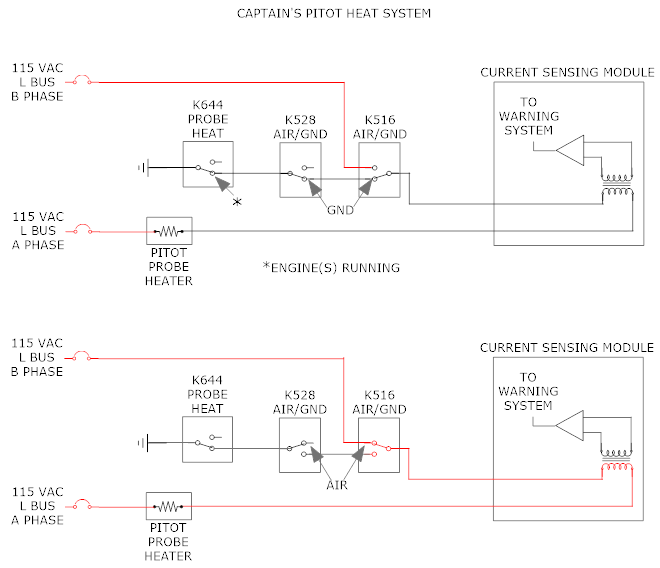
I'm somewhat perplexed on the electrical theory behind the 767's pitot heat operation in the air mode.

To start with, there is no crew interaction with the system (there is no control On/Off switch on the overhead panel). The heaters are off while the aircraft is on the ground with the engines not running. 115 VAC (A phase) power is always present on one side of the heater coil. With either (or both) engine(s) up to speed, a ground path is provided via two air/ground relays (K516 and K528) and a heat control relay (K644). K644 remains energized at all times with engines running, but it is not used once the aircraft goes airborne.

The confusing aspect of this is how it functions in the air mode. Once the aircraft is off the ground, both air/ground relays relax. At that time the previous supplied ground is replaced with 115 VAC (B phase) power. I "do not" understand how this is possible. You have two phases of power acting across a heater coil. Exactly how does current flow??? It must, because the current sensing module has to see current flow to keep the "Pitot Heat Off" light extinguished.


767-300 AMM 30-31-00 SSM 30-31-01

Attachments:
Last edit: 6 years 10 months ago by Mark.

Please Log in or Create an account to join the conversation.

More
7 years 4 months ago #516 by jake ounce
Replied by jake ounce on topic Pitot Heat
I'd bet the Window Heat Controllers have logic that figures this out and provides a path.

Please Log in or Create an account to join the conversation.

More
7 years 4 months ago #517 by Mark
Replied by Mark on topic Pitot Heat
I just don't understand how the "trons" flow. There's no hard ground in the system when they're in the air..

Please Log in or Create an account to join the conversation.

More
1 day 13 hours ago #1853 by Mark
Replied by Mark on topic Pitot Heat
We recently had a pitot probe that was not pulling enough current in the low power mode to satisfy the current flow relay. The associated overhead warning light and EICAS message were on. The probe "was" getting hot

This problem was noted by the crew right after the first engine was started. The engine speed cards are what turns on the probes in a low heat mode.

When the aircraft was placed in the "air" (or high power) mode, the failure indication was gone. It also was gone when trying the probe heat test switch.

After wasting about an hour chasing relays..... we hung a new probe on the connector and tried low power..... it worked normal.

After digging into the print, it was noted that the test switch puts the probe in a high heat mode.

Please Log in or Create an account to join the conversation.

Time to create page: 0.728 seconds