
- 167 users







Pinned Items
Recent Activities
-
 That's exactly what we do. Isolate the Air Data by disconnecting (the fittings are self-sealing when removed).
We then apply pressure into the static system. This can be done either with the test box or low pressure regulator.
Then..... we use leak detector to spray down the lines and fittings. We'll have bubbles at the leak point.
I've tried the acoustic tester, but we have better luck with the liquid detector solution.
I've run pressure up to 8 PSI for most leak searches. Higher pressure can be used, but 8 seems to work well.
Most of our leaks are fittings, either elbow or "T". They get hairline cracks in the threads. We see this more in the winter when the aircraft are left down-powered and everything inside freezes.
Backing up to the Pitot/Static line isolation..... a schematic of the system should be consulted before starting the whole process. Every item (especially analog instruments that still use internal bellows) have to be isolated as you stated above. A full set of caps and plugs of different sizes in a box helps.
Post is under moderationStream item published successfully. Item will now be visible on your stream. -
joshuajonesavionics@gmail.com reacted to this post about 6 days agoThanks for the entry Diego.
Good find.... and I hope this is the end of the problem.Post is under moderationStream item published successfully. Item will now be visible on your stream. -
Post is under moderationStream item published successfully. Item will now be visible on your stream.
-
joshuajonesavionics@gmail.com replied to the topic Airspeed to PSI Conversion in Troubleshooting TipsThe reference for the knots to PSI in the manual is good. Maybe I'm reading this wrong, but you would attempt the same on the static system? Disconnect the computers, or cap the systems if they don't have quick disconnects, and apply pitot pressure from a dps-1000 to the static lines? Or would you pull vaccum?... I usually just pull vaccum as if running it up during a 91.411 to find the leaks on smaller airframes (King Airs and smaller). Doing it on the ATI/ABX 767's can be a bit more difficult using this process. The acoustic imagers/probes help if you are scanning the right spot at the right moment.Post is under moderationStream item published successfully. Item will now be visible on your stream.
-
Post is under moderationStream item published successfully. Item will now be visible on your stream.
-
 Oct-23-2026
A 767 with a long history of intermittent faults:
Flickering lights on different occasions.
Pitot heat Korry Switch lights
Flt data Recorder off light
Equipment Cooling Valve light
F/O air speed V1 and AOA on flat screen
Since December 2025 has been a problem
multiple entries and replacement of equipment and harness
PSEU unit accusing always sensor S267 R/H MLG
computer will switch from far to near causing the lights flickering.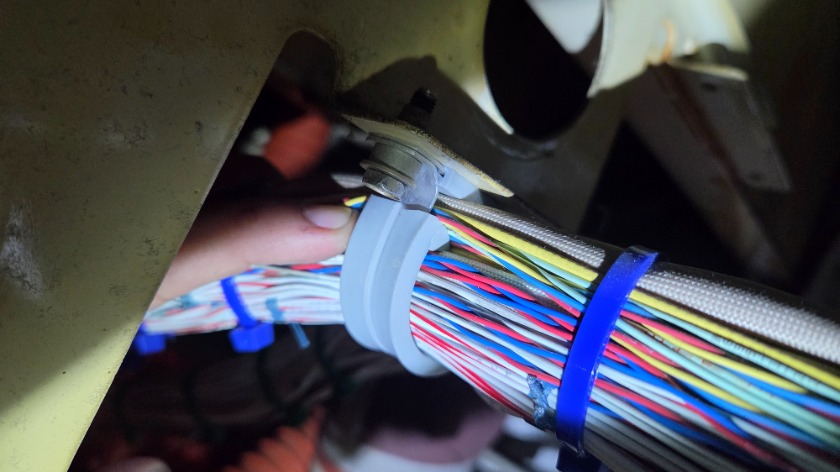
On the Fwd E/E behind the EICAS computers, probably from the a last MOD found 3 clamps pinching wires on a big bundle. This problem has caused multiple AOG and money loss to the company.
Hours of T/S and man power unknown.
Post is under moderationStream item published successfully. Item will now be visible on your stream. -
Post is under moderationStream item published successfully. Item will now be visible on your stream.
-
Post is under moderationStream item published successfully. Item will now be visible on your stream.
-
Post is under moderationStream item published successfully. Item will now be visible on your stream.
-
I have used a Megger on engine loops, but I'm not a fan of using one.
A Systron loop is pressure filled, so a Megger shouldn't hurt it. The Kidde???? I would stay away from a Megger.
With this problem, after we used the decade box for substitution, the loop read 30MΩ (that was just from removing the one terminal lug).
We smacked the white doughnut pretty hard and the 4.5KΩ returned. It didn't fail after the beating.
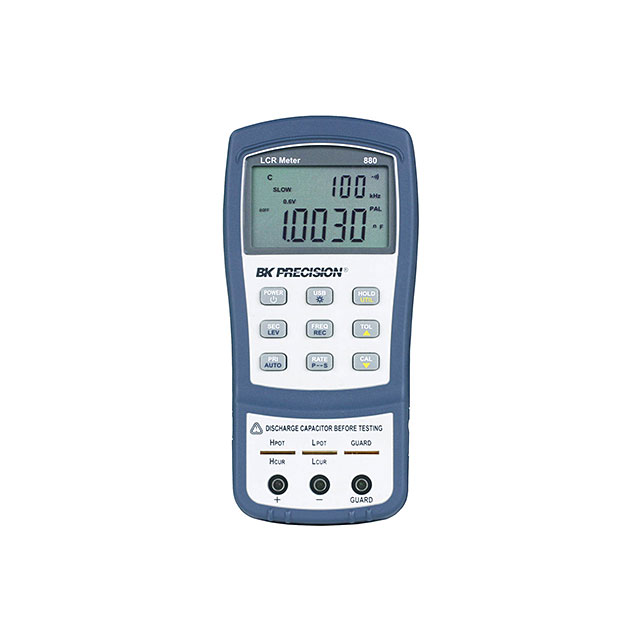
I use a regular VOM on most engines loops. A LCR Meter can also be used.
A LCR Meter should "always" be used on body and wing overheat loops.
Post is under moderationStream item published successfully. Item will now be visible on your stream.
There are no activities here yet
Rotate Aero Users







Random acts of kindness are contagious!!
Don't have an account?
Register now to join the community!
©
2026
Rotate.Aero